A Home Should Feel Good With Your Eyes Closed
The Forgotten Art of Sensory Design
We have become incredibly skilled at designing homes for the eye. We collect inspiration images and build moodboards. We choose finishes from photographs. We scroll through perfectly styled interiors and save the ones we want to recreate.
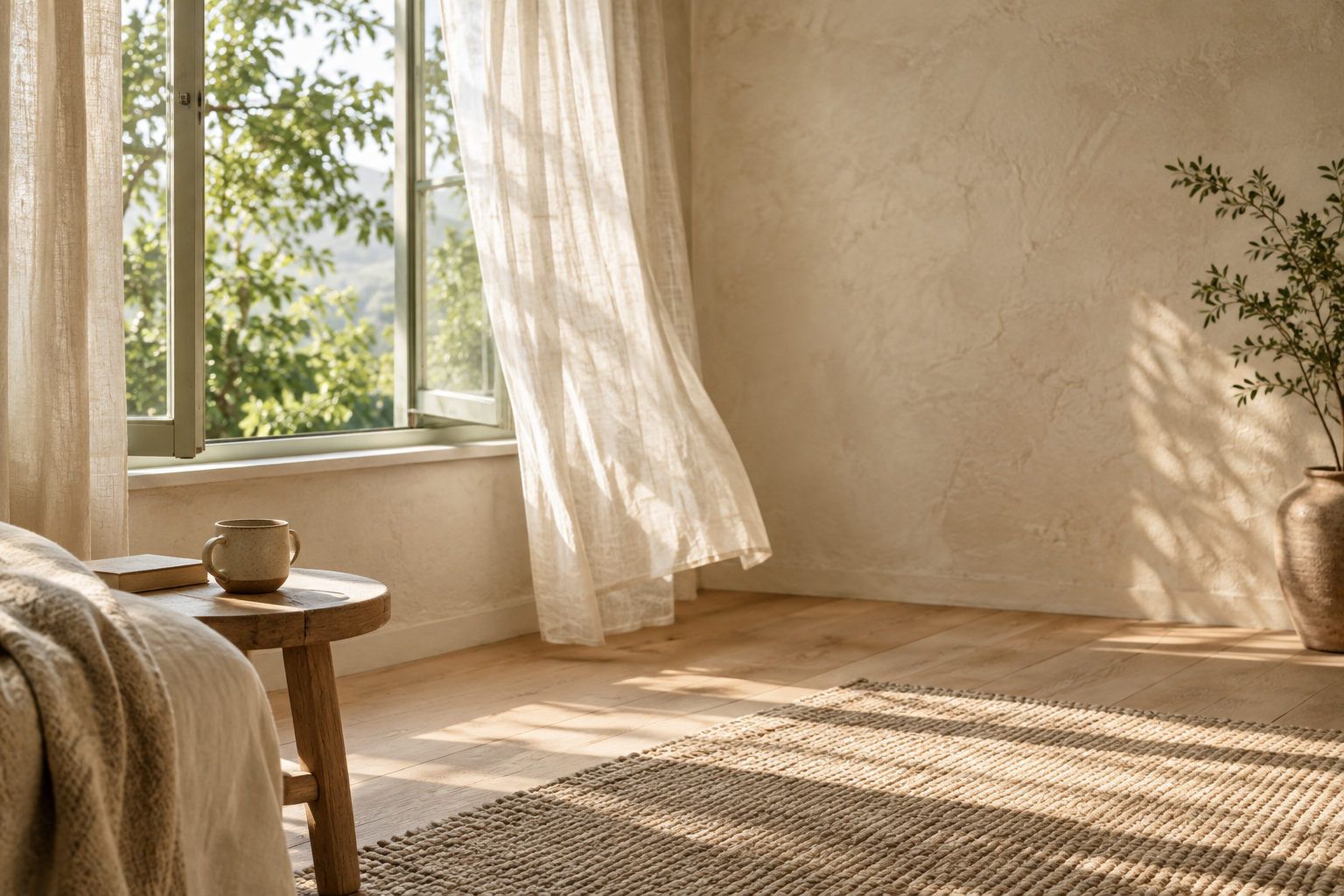
I love beauty. I’ve built much of my life around creating it.
But a home is not a photograph.
A home is an experience. And I think much of modern Western design has forgotten how to design for that
When beautiful doesn’t feel good
Years ago, I helped open a retreat center in upstate New York. Architecturally, it was impressive. It had been designed by a celebrated architect and received recognition from renowned architecture publications. It was the kind of building you could easily imagine spread across the glossy pages of a design magazine.
And yet, something about being there never quite landed in my body.
The architecture was extremely linear: long corridors, hard right angles, metal lines, slate and stainless steel, large expanses of glass. There was very little softness or roundness. Sound travelled and spaces echoed. There wasn’t much sense of containment.
It was beautiful, but I didn’t experience it as particularly nourishing. I spent about ten months there and watched many different people and groups move through the building. Over time, I noticed how much conflict seemed to arise in a place that had been designed for retreat. I can’t say the architecture caused that conflict—human dynamics are infinitely more complicated than that—but it made me start asking a question that has stayed with me ever since:
What role is the space itself playing?
What are our bodies perceiving that our eyes, trained to recognize “good design,” might be overlooking?
Years later, a beautiful new connection welcomed me into his little corner of a magical permaculture farm, where he had made a home in a small cedar cabin tucked among orange and avocado trees. And when I say small, I mean tiny. It was meant to be a modular shed. Somehow, he had turned it into a home.
It wasn’t an architectural showpiece, but the first spring I spent there, my whole body went: Ahhhhh.
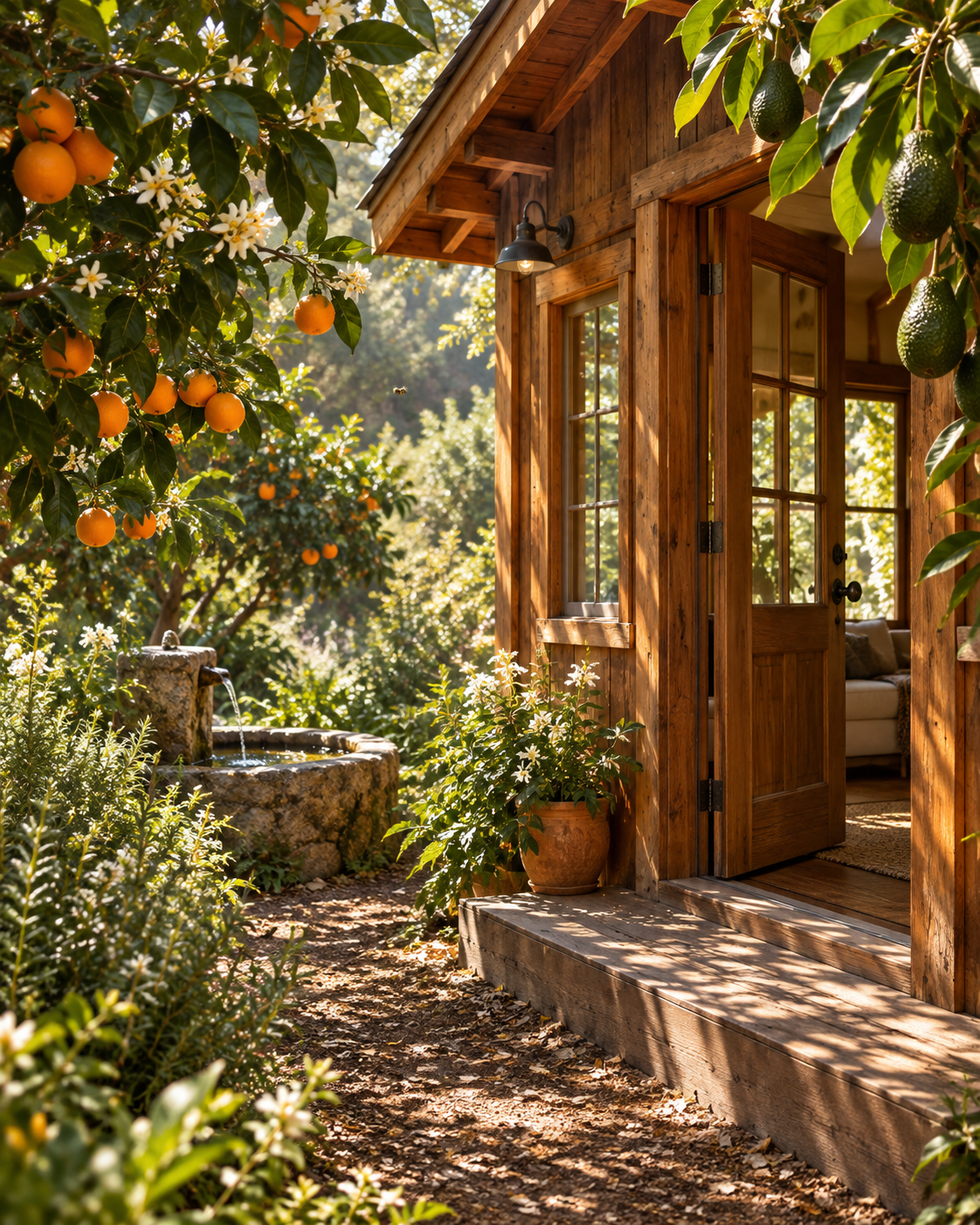
It was March and April in California, and the orange blossoms were in full bloom. The smell of neroli was intoxicating. There was dry heat on my skin, the gentle sound of a small water fountain nearby, birds singing in the trees, bees moving through the blossoms, and shade beneath the canopy. I remember feeling tucked into this tiny, protected cocoon while the abundant lush landscape stretched around us.
Nothing about that experience came from an expensive piece of furniture or a perfect interior design scheme.
The place simply felt good.
And I’ve come to believe that this distinction matters far more than we’ve been taught.
I softened there. I spent a lot of time barefoot and close to nature, showering outside with sunlight peeking through the leaves and picking fruit straight from the trees. I felt less civilized in the best possible way—more animal, more woman, more human. More like I was inhabiting some natural birthright I had forgotten. It felt like heaven.
Maybe the problem with “interior design” is the word “interior”
I have a complicated relationship with modern interior design. Not because I don’t care about design—quite the opposite—but because I think we’ve been conditioned to believe that interior design is something we buy in a store. A new sofa, a new lamp, this year’s colour, the chair everyone suddenly has, a basket, a throw, a vase, a side table, another object to complete the room. Then the trend changes and we begin again.
But I’m increasingly interested in the problem hiding in the term interior design itself: interior. As though the design of our homes stops at the walls. As though the air outside the window, the path of the sun, the trees, the season, the sounds coming through the door, the soil beneath the foundation and the way we live inside the space are somehow separate from its design.
I prefer to think about home design.
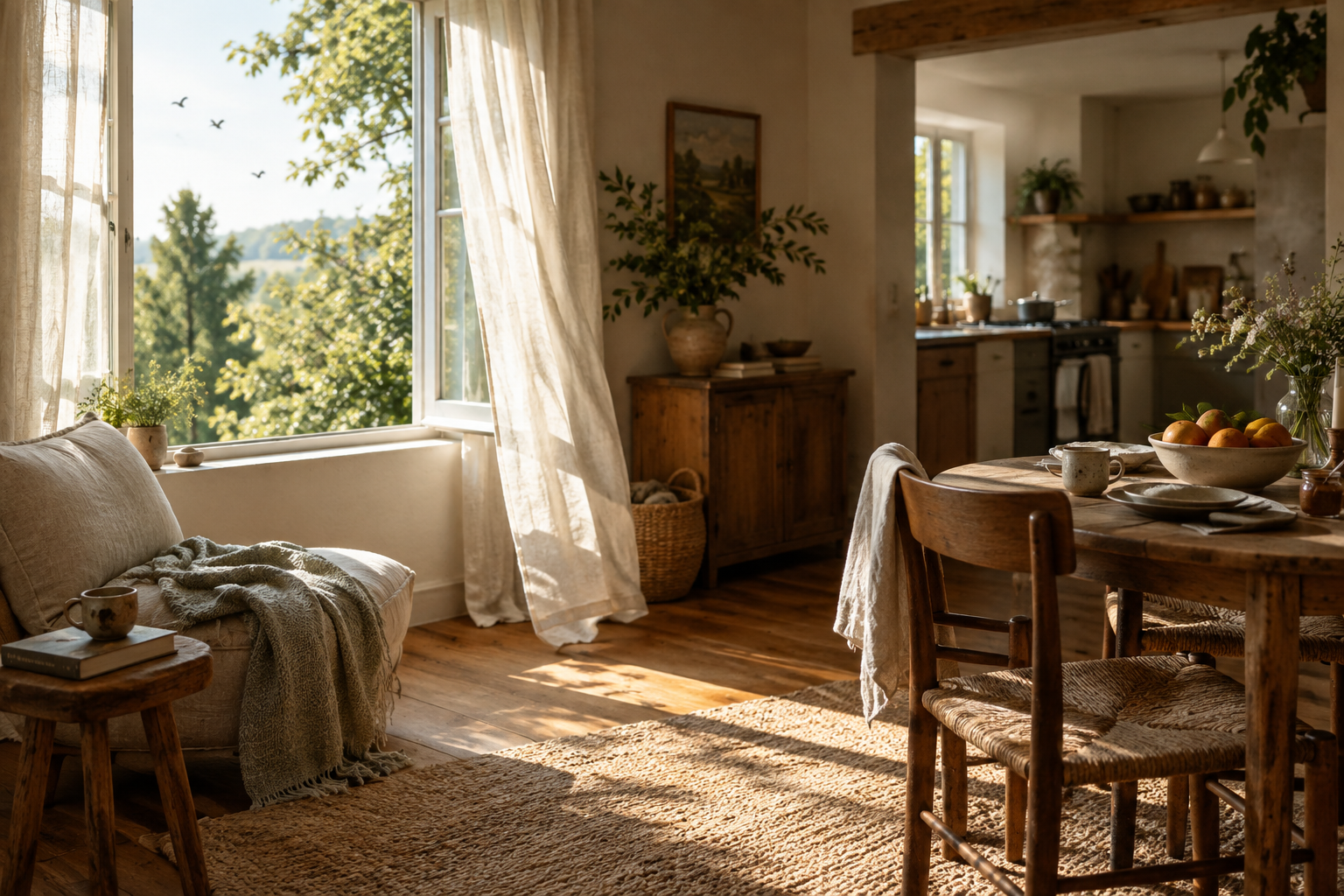
Home is the morning light coming through the east window. It’s what your bare feet touch when you get out of bed. It’s whether you can hear birds or highway traffic. It’s where everyone mysteriously ends up gathering during a dinner party. It’s the smell of something cooking, whether there’s somewhere to curl up, the way air moves through an open window, what you see when you look outside, whether you feel exposed or protected.
It’s the life happening there.
Long before we consciously decide whether we like a room, our senses are already gathering information about it. Our eyes read light, proportion, movement and colour. Our ears register echo, mechanical noise, voices, birds, traffic and silence. Our skin notices temperature, airflow and texture. Our noses pick up materials, air, food, people and land. All the while, our bodies are orienting themselves within the space.
Sensory design simply asks us to widen the conversation.
Instead of only asking How does this room look?, you can begin asking: How does it sound? What does it feel like against my skin? What does the air smell like? Where does my eye get to rest? What does my body do when I enter? And perhaps most importantly: How do I feel here?
I’ve studied natural building, sensory design, geobiology and different traditions of space harmonization, and I’m comfortable acknowledging both the physical and the less easily measurable ways we relate to place. But you don’t need to share any particular belief system to experiment with this.
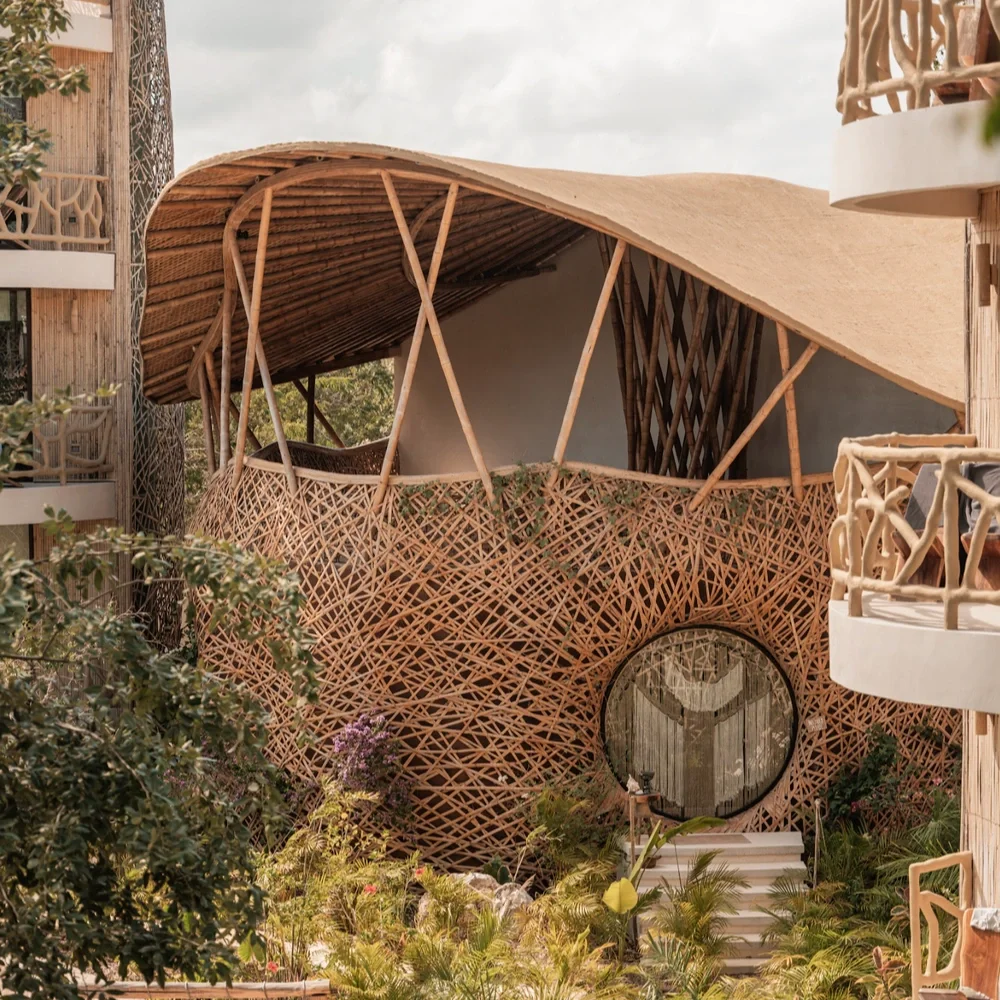
Most of us have experienced walking into a room and immediately relaxing. We’ve also experienced the opposite. Sometimes we can explain why and sometimes we can’t.
Either way, I think the invitation is the same: pay attention.
Beauty isn’t only something we see
I don’t believe a sanctuary needs to be minimalist. I love handmade things that carry stories. But I do believe our eyes need somewhere to rest.
Look around a room in your home and notice what is asking for your attention: packaging, screens, cables, labels, objects you don’t particularly like but have somehow owned for fifteen years, things you keep because someone gave them to you, decorations you bought because a shelf looked empty. Notice what happens when everything is asking to be seen at once.
Sometimes harmonizing a room isn’t about adding the missing object. It’s about editing.
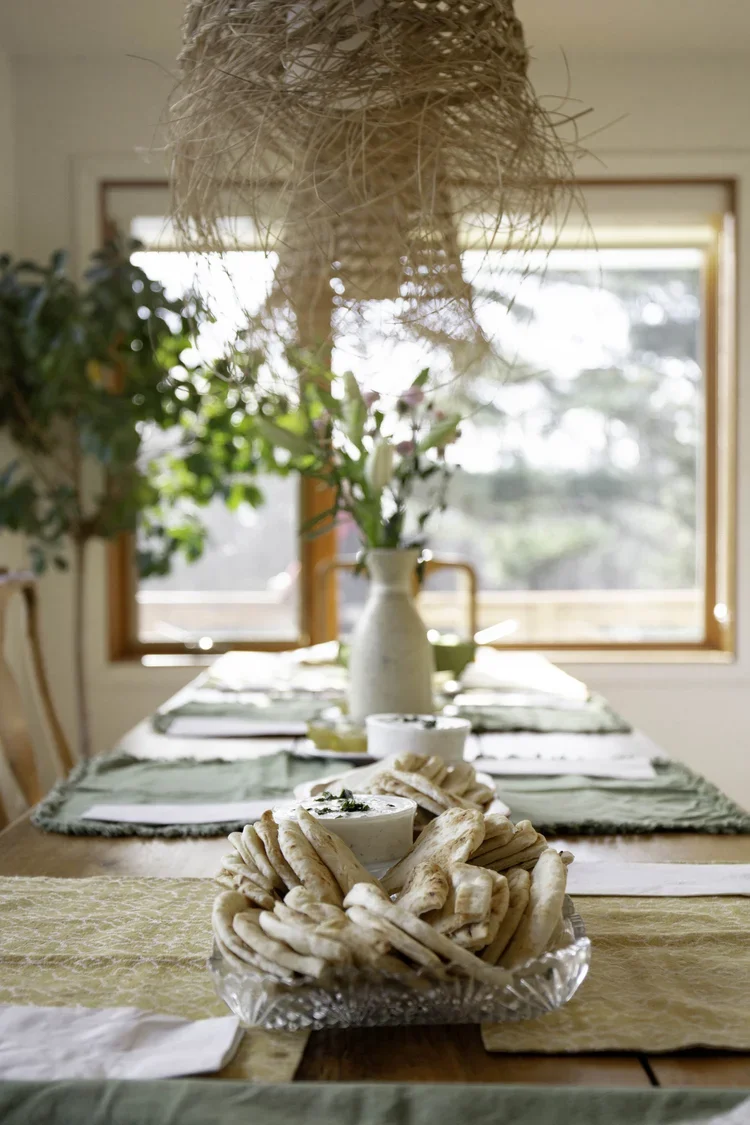
I love doing this in kitchens.
Instead of letting packaging become the visual landscape of the room, grains and dried foods can live in glass jars. Fruit can sit in a bowl. Herbs can dry from a beam. Vegetables can become part of the abundance of the space. Suddenly you’re looking at food rather than branding: colour, texture, life. The question becomes less “What else does this room need?” and more “What here actually deserves my attention?”
Then there is sound, an entire dimension of home we rarely see represented on a moodboard. A room can be visually stunning and acoustically exhausting. Hard surfaces behave differently from soft ones; an echoing room feels different from one filled with textiles, books, rugs, curtains, wood and other materials that soften the experience of sound.
But I’m interested in more than controlling unwanted noise. I’m interested in what home should sound like: a fire, someone chopping vegetables, rain against the roof, wind moving through leaves, water, floorboards, music, people talking around a table, birds through an open window—or perhaps simply the quality of silence we need.
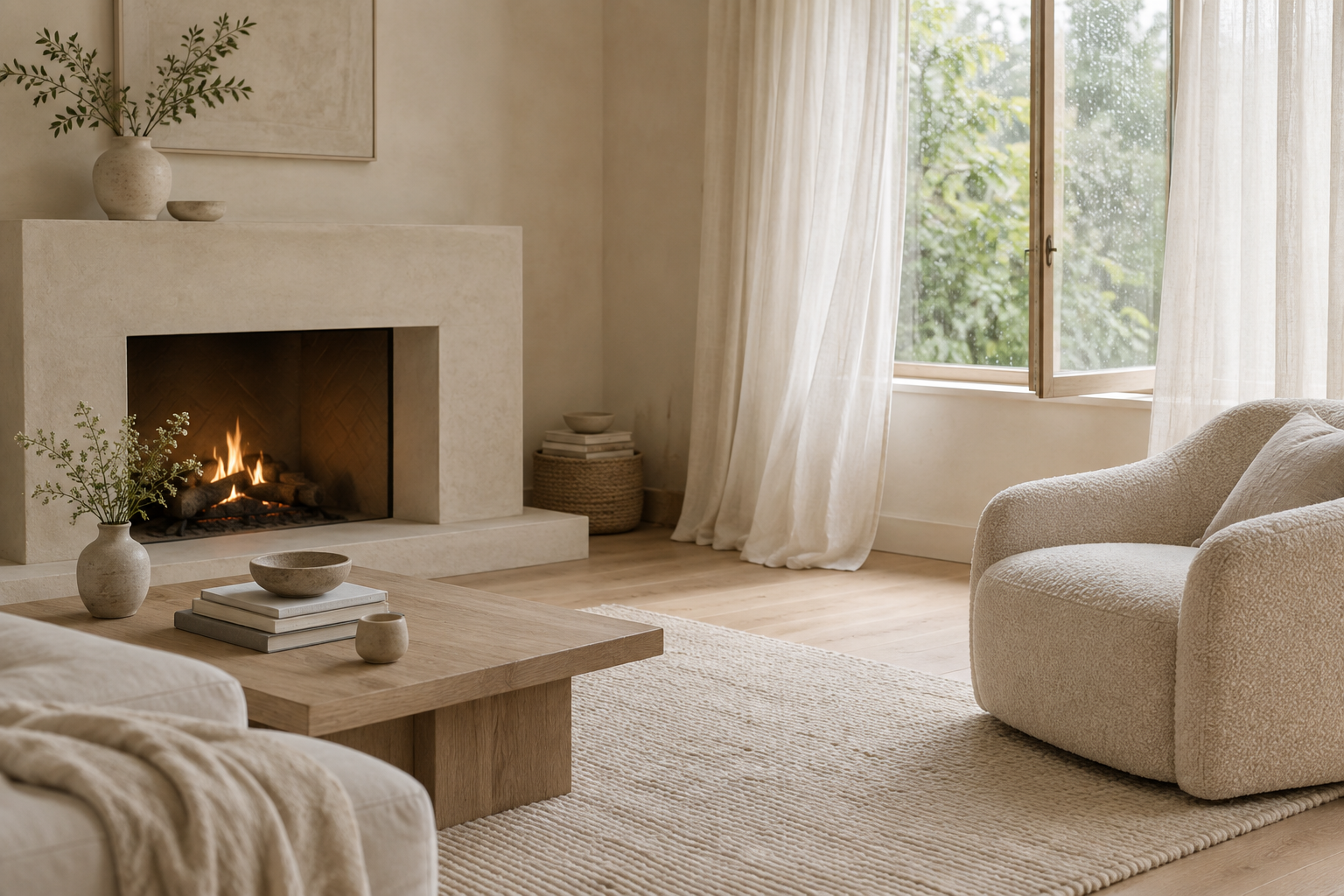
Before adding another sound to your environment, listen to what is already there. Sometimes what we need isn’t another playlist, device or intervention.
Often times, it’s turning something off.
And then there is touch. We talk about touching our homes as though it happens occasionally, when in reality our homes are touching us all day. The sheets against our skin, the floor beneath our feet, the chair holding our body, the handle in our hand, the towel after our shower, the countertop underneath our palms, the air moving across our face. This is one of the reasons I am so deeply drawn to natural materials.
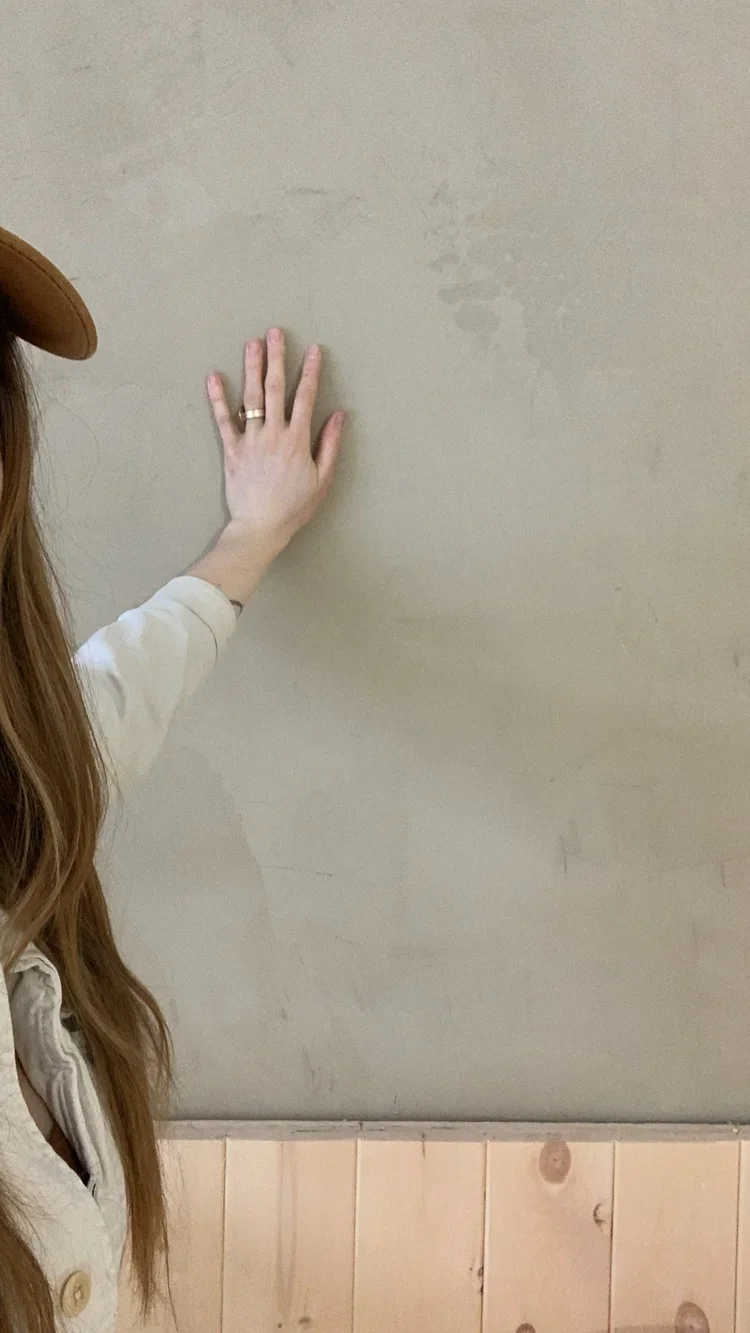
Clay feels different from conventional drywall and paint to me because it feels like bringing nature back inside the house.
Working with earth reconnects me to something.
Clay has texture, variation and depth. It responds to the hand and can carry evidence of the person who applied it. It makes me feel more grounded, more rewilded. Less denatured.
The same thing happens for me with wood, stone, linen, wool and handmade ceramics. Natural materials don’t simply look like nature; they carry evidence of where they came from. Wood has grain. Stone records geological time. Linen still reveals its fibre.
Clay carries mineral variation and the movement of the hand that shaped it.
The material doesn’t have to be perfectly uniform to be beautiful. In fact, its variation is often what makes it so unique and stunning.
Smell might be one of our most powerful and least consciously designed senses.
I’m less interested these days in making a house smell like something purchased in a bottle than I am in noticing what the house actually smells like: fresh air, rain, wood, earth, fire, coffee, bread, herbs, clean linen, something simmering on the stove, the landscape coming through an open window.
I’ll never be able to separate that tiny cedar cabin from the smell of orange blossoms. The scent wasn’t inside the cabin in the way we normally think about fragrance in interior design. It belonged to the land. The windows simply let it in.
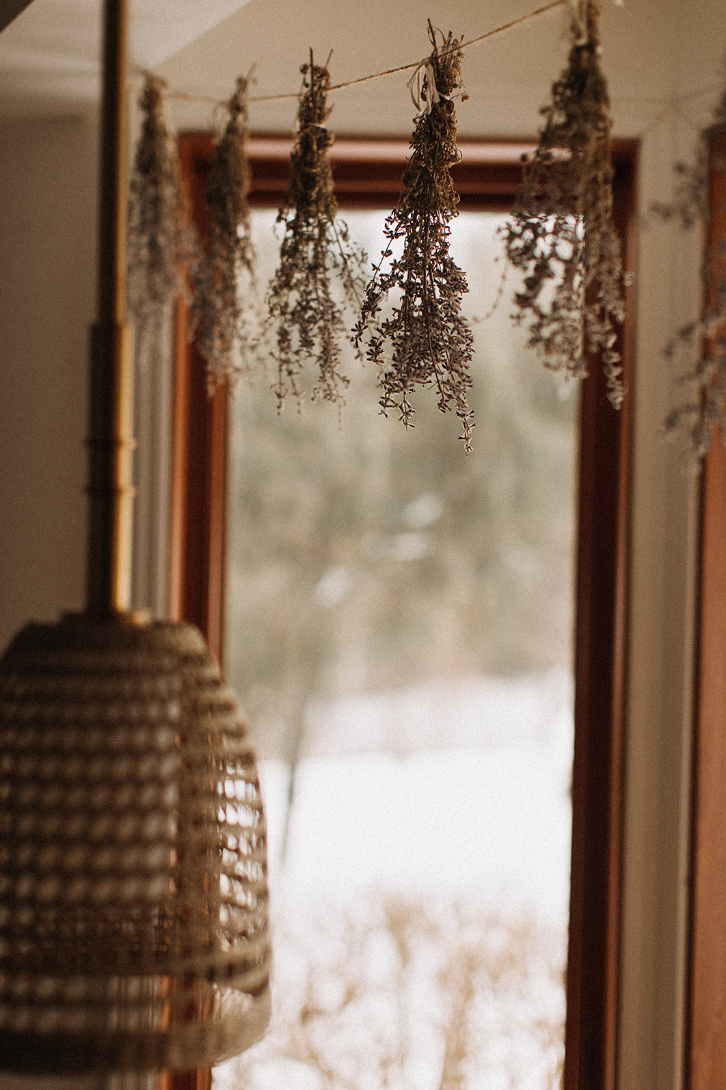
And then there is perhaps the strangest sense to associate with home design: taste. But when you think about what a home is actually for, it begins to make perfect sense. Perhaps taste enters design through hospitality.
The kitchen where people gather even though the living room is ten feet away. Morning tea. Fruit within reach. Herbs growing outside the door. A table where dinner accidentally lasts four hours. A meal cooked slowly because there is nowhere else you need to be.
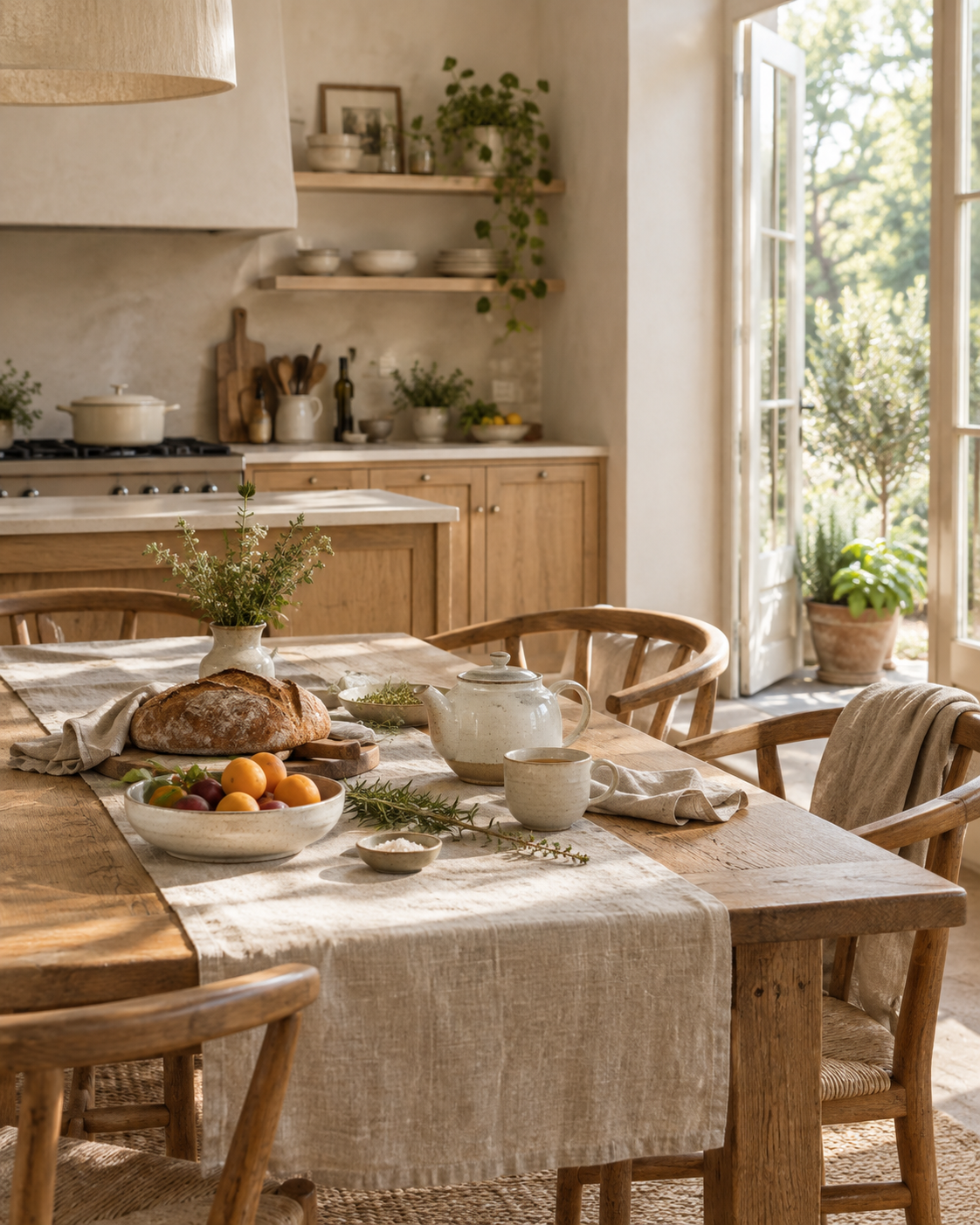
Does your kitchen invite you to cook?
Does your table invite people to stay? Is there somewhere beautiful to sit with your coffee? Does the way your home is arranged support nourishment, or merely the storage and preparation of food?
A home isn’t simply a container for our belongings.
It’s a container for our rituals.
The sense underneath all the others
At Sanctuarium, my home and retreat space in the mountains of Quebec, there are many things I could point to when someone asks why the place feels the way it does. There is stone and wood everywhere. There is abundant natural light from the east, south and west. There is the pond and the frogs, the mountain view, the forest, the smell after rain, wood smoke, the openness of the land.
But there are also things that would never appear in an interior design photograph.
I live at the end of a dead-end road. I recognize the sounds of my neighbours’ cars. I know who is around. I know the rhythms of the place. There is familiarity and containment. My body understands its territory.
And because I feel protected there, I can expand.
I can walk around in my robe, splay out, make things, rest, gather people, disappear into a project, stare at the mountain, be ridiculous, be quiet. I can feel like a goddess in my realm.
I think that’s the part of sanctuary we sometimes miss when we reduce it to calmness.
Sanctuary isn’t only a place where I feel protected. It’s a place where I feel protected enough to fully inhabit myself.

That is the sense underneath all the others: the body.
Where do you naturally sit in your home? Which room do you avoid? Where does everyone gather? Where do you always want to curl up? Where do conversations flow? Where do you feel exposed? Where do you breathe more deeply? Where does your cat always choose to sleep? Where does time disappear? Your behaviour is information. Your body has been reviewing your home this entire time. It’s finally time to listen.
Sanctuary is not an aesthetic
This is important to me because the word sanctuary can easily become another aesthetic to consume: clay walls, linen curtains, handmade ceramics, neutral colours, a cabin in the woods, a very expensive sofa in beige.
I happen to love most of the things on that list. But none of them are prerequisites. Sanctuary is not an aesthetic.
For me, sanctuary is a place that regenerates me instead of depleting me. It’s somewhere I feel safe and nourished, somewhere I can be in pleasure and in my body. Somewhere I can gather, create, rest and reconnect with myself.
Your sanctuary might be an apartment, a rental, a suburban house, one bedroom or a little cedar shed in a citrus orchard. You don’t necessarily need more money. You don’t need to renovate your entire home. And you certainly don’t need to buy anything someone on the internet tells you a sanctuary is supposed to contain.
You may need something much simpler: to notice, to listen, to trust what your body is telling you—and to remember that you have some authority here.
Because the goal isn’t for me, or an interior designer, an architect, a trend report or an algorithm, to tell you what your sanctuary should look like. The goal is for you to become sensitive enough to recognize what makes you feel at home. That sensitivity is something you can practice. And once you develop it, you carry it with you into another room, another house, another season, and any other chapter of your life.
Harmonize Your Sanctuary
I’d like to invite you to forget, for a moment, what your home is supposed to look like.
What is it like to live there?
And what would help it regenerate you just a little more?
This is the question at the heart of my work, and the reason I created Harmonize Your Sanctuary. It’s not a guide to creating a home that looks like mine, or another list of things you need to buy. It’s a way of learning to see and sense your own space differently.
Inside, I walk you through the layers we’ve begun exploring here: your senses, the materials that surround you, the health of your home, the less visible relationship we have with place, and simple ways to begin harmonizing the space you already live in. Because you probably don’t need someone else to tell you what sanctuary looks like. You need the tools to recognize what sanctuary feels like to you.
You already have the instrument. The guide helps you learn how to use it.
Explore Harmonize Your Sanctuary →
This guide is meant for the home makers of the ancient future who wish to empower themselves in creating a healthier, more generative home for them & their families
This 31-page guide will help demystify sustainable and healthy homes, and give simple & easy shifts you can implement today, for free, to get there.
This product includes:
What is an ecological home?
Certifications
Different types of sustainable homes
Interior design hacks
In-depth scan of the home through the lens of the different senses, with guides on what to incorporate or ditch (see, smell, hear, touch, feel)
Air quality hacks
This product will help you to...
Gain education on what is actually healthy and not
Discern what is empowering and resourcing you, versus what may be depleting you and your family
Make conscious design choices for yourself and the planet
Make your home a sanctuary so you can cultivate a regenerative way of living in a way that supports your well-being and fuels your purpose